Monthly chart
Best time to visit Komodo National Park
Answer first
The best time to visit Komodo National Park is April to June or September to December, the windows Indonesia's tourism ministry names, with the park itself dry for about eight months a year.
Seasons
Komodo, month after month
Twelve months at Komodo
Choose a month to see which season it falls in and what to expect on the water.
Sunset
Jan
- Sun goes down near 18:26
- Season: When the rains arrive2
Komodo Island may be temporarily closed in months such as November, December and January, our listing says.
Feb
- Sun goes down near 18:26
- Season: When the rains arrive2
The rainy season often disrupts boat trip schedules.2
Apr
- Sun goes down near 17:58
- Season: Good window2
BMKG expected the 2026 dry season to start in April, May and June.6
May
- Sun goes down near 17:49
- Season: Good window2
Jun
- Sun goes down near 17:49
- Season: Good window2
Jul
- Sun goes down near 17:56
- Season: Dry, crowded sailing2
One listing notes crowded sailing from July to September, and the dragon mating season in July and August.
Aug
- Sun goes down near 18:00
- Season: Dry, crowded sailing2
Sep
- Sun goes down near 17:57
- Season: Top season for Komodo2
Indonesia.Travel names September to November the prime season for manta rays, whale sharks and dragons.2
Oct
- Sun goes down near 17:54
- Season: Top season for Komodo2
Still in the prime season, and outside the July to September crowds a listing notes.2
Nov
- Sun goes down near 18:00
- Season: Prime season, closure risk2
The prime season runs to November, but the closure warning for the island begins.
Dec
- Sun goes down near 18:14
- Season: Good window, closure risk2
Still a good window by the ministry, but Komodo Island may close temporarily.
Seasons from the tourism ministry's guide and the park's own website; no month-by-month rainfall table from an official source was found, and no weather station lies within range of the park, so no other place's climate is borrowed.
Komodo has two seasons, not four: a long dry stretch and a short heavy wet one. Pick your month by rainfall, by the closure risk the listings mention and by how crowded the boats get, and you will have most of what the calendar can tell you.
Editorial team, komododaytour.quest · Updated November 2, 2026 · Reading time: about 6 minutes
The essentials list
- DryThe park's own website says it has little or no rain for about 8 months of the year.1
- RainIndonesia.Travel names January to March as the rainy season, which often disrupts boat schedules.2
- ClosuresOur listing warns that Komodo Island may close temporarily, especially in November, December and January.
- CrowdsOne listing notes crowded sailing from July to September.
- CapVisits are capped at 1,000 tourists per day since 1 April 2026.3
The short answer: April to June or September to December
Indonesia's tourism ministry gives April to June or September to December as the best times for the park, with September to November the prime season for manta rays, whale sharks and dragons.4 The park's own website says it has little or no rainfall for about 8 months of the year and is strongly shaped by monsoon rains.1 For a trip built around boats, hikes and snorkeling, those windows are the sensible ones, and most of the planning advice on this page is about choosing a month inside them.
Heat is part of it, so timing is not only about rain. The park website gives temperatures that generally range from 17 to 34 °C, and the ministry says temperatures on Padar rise after 9 am.1,5 A day on the Padar slope in the middle of the dry season is a day in strong sun.
The Komodo dry season is not all equal, though. The listings mention crowded boats from July to September, and the wet-season closure risk starts in November, so the quiet, comfortable middle of the window is smaller than it first looks. The sections that follow break the year down so you can see where it sits.
The year in four stretches
Seasons as the official sources state them
| Months | Season | What the references show | The fine print to check |
|---|---|---|---|
| Jan to Mar | Rainy | Rain often disrupts boat trip schedules | Closure risk in January |
| Apr to Jun | Good window | Named a best time by the ministry; BMKG expected the dry season to start | Rain tailing off |
| Jul to Aug | Dry | Dragon mating season, harder to spot | Crowded sailing, July to September |
| Sep to Oct | Prime | Prime season for mantas, whale sharks and dragons | Crowded in September |
| Nov to Dec | Mixed | Still inside the ministry's September to December window | Closure risk from November |
Seasons from Indonesia.Travel and BMKG; crowd and closure notes come from the overnight and day listings.2,4,7,6
What the official sources say about the seasons
No official source we found publishes a month-by-month rainfall table for the park, so this page gives the seasons as the park authority and the tourism ministry state them. The ministry calls January to March the rainy season, which often disrupts boat trip schedules.2 The park website says the wind is from the west from November to March, sending large waves onto the west beach of Komodo, and that from April to October the dry wind sends large waves onto the south beaches of Rinca and Komodo.8
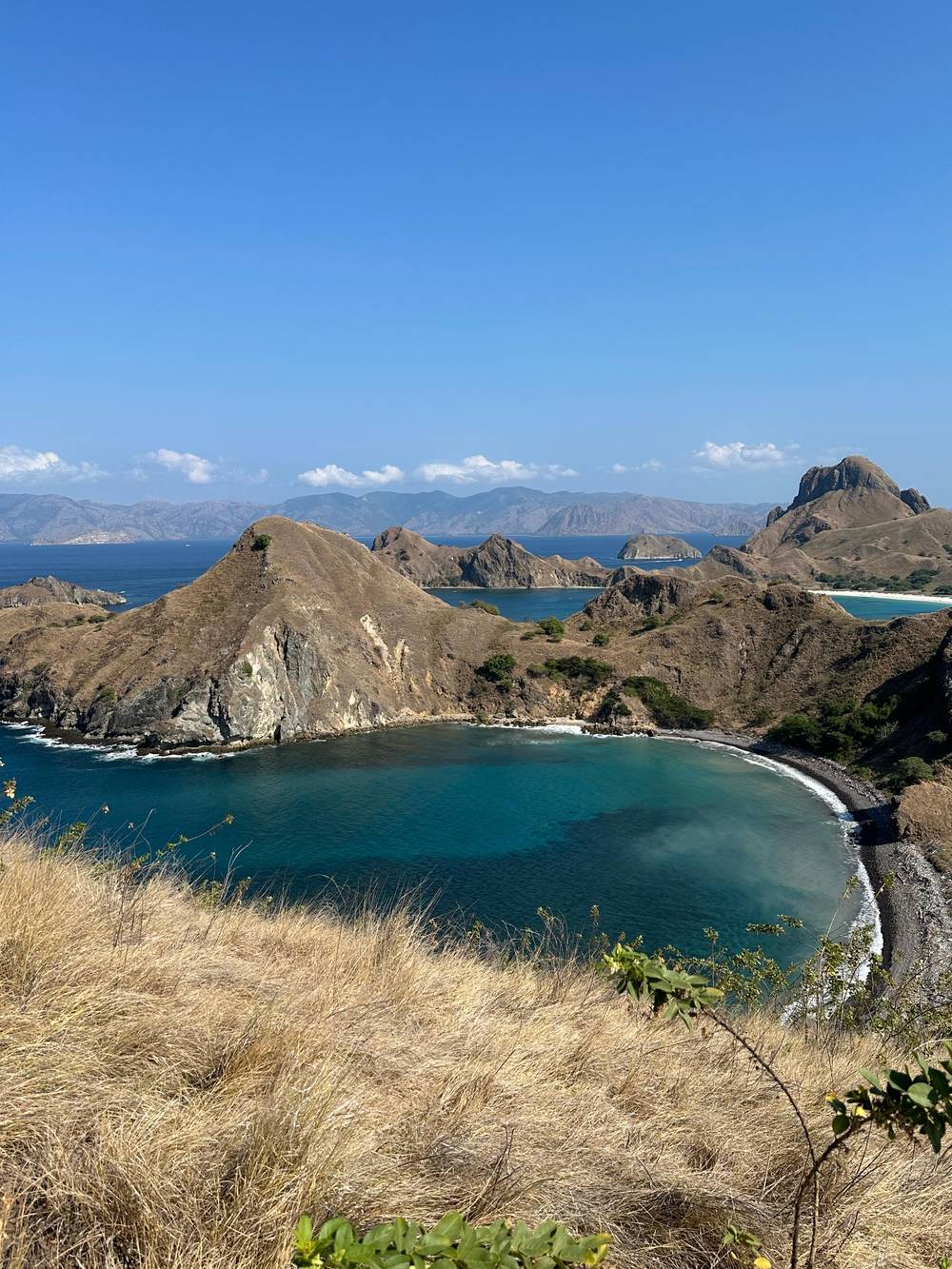
On Padar the season shows in the colors: the hills are green in the rainy season and turn sandy like a savanna in the dry season.9 November is the awkward month on the calendar: the ministry still lists September to December among the good months, but the closure risk the listing describes has already started.4
Use the seasons to compare months, not to promise a particular day. The ministry names early morning as the best time to visit anywhere in the park, since it is cooler and the ocean tends to turn choppy in the afternoon.10 No calendar can tell you what the sea will do on the morning you sail.
A Komodo year
The calendar as the sources describe it
Jan through March
When the rains arrive
The ministry says the rain often disrupts boat trip schedules.2
Apr through June
The dry season takes hold
BMKG expected the dry season to start in these months, and the ministry names them a good window.6,4
Jul and Aug
Dry and busy
One listing notes the mating season, when only a few dragons may be seen.7
Jul through Sept
Crowded boats
A listing warns of delayed departures when sailing is crowded.
Sept and Oct
Top season for Komodo
The ministry names September to November the prime season for manta rays, whale sharks and dragons.4
Nov through Jan
Closure risk
Komodo Island may be temporarily closed, says our listing.
Heat on the water and on the hill
The park website says temperatures generally range from 17 to 34 °C.1 That range is wide enough that the hour matters more than the month: the ministry says temperatures on Padar rise after 9 am, and advises early visits.5
The dry months bring strong sun to the Komodo and Padar walks. Take water, cover your head and plan the climb for the cooler part of the day; the ministry advises against visiting Padar at noon if sun exposure bothers you.11 The listings note the Padar part involves trekking up a hill.
In the wet months the numbers feel less extreme but the humidity is higher, and storms can reshape the day. A rain jacket matters more from December to March, and a hat matters more from May to October. Packing for both is the safe choice if you are traveling in a shoulder month like April or November.
Choose a month
Your month on Komodo
Say what matters most and see the window that fits
If I want to avoid the rain
Outside January to March
The ministry names those months the rainy season.2
If I want thinner crowds
April to June or October
Crowded sailing is noted for July to September.
If I want several dragons
A month outside July and August
Those months are the mating season, when only a few may be seen.
If I must travel in the wet months
A flexible, cancellable tour
Cancellation is free until 24 hours before.
If I want calm odds on the island
Avoid November to January
Komodo Island may be temporarily closed then.
Closures and changed routes in the wet stretch
The firmest timing warning comes from our own listing. It says Komodo Island is managed by the government and may be temporarily closed, especially in months such as November, December and January, and that when it closes the itinerary or the travel date is adjusted. The same listing says the order of stops may vary with weather, sea conditions and park rules.
Other listings put it differently. A speedboat day says the itinerary may be adjusted for weather and sea conditions, and a liveaboard listing says the plan may change on instructions from the Harbour Master or park authorities. This is normal for the area, not a sign of a bad operator.
Currents add to the picture all year. The tidal flow through the Sape Strait is among the strongest in the world, and along Komodo's east coast it can be dangerous with inexperienced guides.12 A good crew reads the sea and changes the plan before you notice. A tour you can cancel until 24 hours before leaves you free to rebook if the forecast turns.
Party price check
Price a trip for your travel month
Enter how many are going and compare four boats
Weigh 4 options
Price a trip for your travel month
Enter how many are going and compare four boats
- Fast-boat day10 hours · a head, from $93
≈
View - Shared speedboat8 hours · a head, from $93
≈
View - Night aboardShared cabin · a head, from $179
≈
View - Budget liveaboard3 days · a head, from $252
≈
View
The prices shown are the lowest GetYourGuide lists today, converted with the ECB's daily reference rate; the exact total waits on the booking page.
Crowds, the daily cap and the dragon mating season
The busy months fall inside the dry window. One overnight listing says departures can be delayed in the high season from July to September, when sailing to Komodo is crowded. That is the trade-off of the dry months: the boats and the trails fill when the weather is easiest.
The new cap shapes this too. The park office has limited visits to 1,000 tourists per day since 1 April 2026, after the park recorded 429,509 visitors in 2025.3,13 The cap should help the busiest days, but it also means peak dates can sell out, so book early if you are going between July and September.
There is one more calendar fact for dragon fans. The same overnight listing notes that July and August are the mating season for Komodo dragons, when only a few may be seen. If seeing several dragons matters more to you than perfect seas, a shoulder month like May, June, September or October may serve you better.
Video
Planning a first visit to Komodo National Park
Rachel and Ibe on YouTube · YouTube loads only once you press play.
has little or no rainfall for approximately 8 months of the year, and is strongly impacted by monsoonal rains
Checklist
Timing checks for your dates
Choosing the date4
- Pick April to June or September to December
- Avoid July to September if crowds bother you
- Check whether it is a closure month
- Book early for peak dates
Bring for your month3
- Hat and sunscreen for the dry hills
- Water for the Padar climb
- A thin rain jacket for the wet months
Keeping options open3
- Prefer cancellable bookings
- Leave a spare day around the boat
- Ask the operator about recent sea conditions
Mantas, turtles and reef timing: what you can count on
Visitors often ask which month is best for manta rays. The listings answer carefully, and so should we. Our tour says manta ray and turtle sightings are not guaranteed and depend on weather, water temperature and luck. A speedboat listing says sightings cannot be guaranteed, as they depend on natural conditions and a bit of luck.
UNESCO explains why the reefs are rich at all: the strong currents of the sea attract sea turtles, whales, dolphins and dugongs.14 The ministry's guide names September to November as the prime season for spotting manta rays, whale sharks and dragons,4 but no source can promise a sighting. Weigh the month for rain, crowds and closures too, which can be checked.
The practical advice is to treat sightings as a bonus. Book a tour with several snorkel stops, since our day lists four, so one quiet reef does not decide the outing. And if your trip is built around diving, ask the operator what they have seen in the weeks before your date.
Picking your month by the kind of trip
For a first visit with a mix of hiking, snorkeling and a dragon walk, April to June is the natural target: the ministry names it a good window, the dry season is arriving, and it falls before the July to September crowds.4
BMKG, Indonesia's meteorology agency, expected most of Indonesia to enter the 2026 dry season in April, May and June, starting in the Nusa Tenggara region.6 It also described Nusa Tenggara as the region predicted to have its dry season earlier than others in 2025.15 So the east of Indonesia is where the dry months arrive first.
For travelers who cannot choose, the wet months are still possible with flexibility. Book free-cancellation tours, keep a spare day and accept that an itinerary may change. For travelers who can choose and want fewer people, October is the month to weigh: it sits in the ministry's September to December window and outside the July to September crowds that a listing notes.4
FAQ
Common questions, brief replies.
When is the dry season in Komodo?
When does it rain most at Komodo?
The ministry calls this the rainy season, and says it often disrupts boat trip schedules.2
Which are the best months to go?
The ministry names September to November the prime season for manta rays, whale sharks and dragons.4
Can Komodo Island close?
Our listing names November, December and January as the months when it may close.
Is July a crowded month?
One listing notes crowded sailing to Komodo from July to September.
Are there fewer dragons in July?
A listing notes that those months are the mating season, when only a few may be seen.
How hot does Komodo get?
Is there a limit on visitors?
The limit has applied since 1 April 2026.3
Sources
- Komodo National Park official website · About Komodo National Park ↩
- Indonesia.Travel (Ministry of Tourism of Indonesia) · Unveil the Lands of Dragons: First-Timer's Guide to Komodo National Park ↩
- ANTARA News (quoting the Komodo National Park Office, BTNK) · BTNK tetapkan kuota 1.000 wisatawan per hari di TN Komodo ↩
- Indonesia.Travel (Ministry of Tourism of Indonesia) · Unveil the Lands of Dragons: First-Timer's Guide to Komodo National Park ↩
- Indonesia.Travel (Ministry of Tourism of Indonesia) · Unveil the Lands of Dragons: First-Timer's Guide to Komodo National Park ↩
- BMKG (Indonesia Meteorology, Climatology and Geophysics Agency) · Prediksi Musim ↩
- Indonesia.Travel (Ministry of Tourism of Indonesia) · Unveil the Lands of Dragons: First-Timer's Guide to Komodo National Park ↩
- Komodo National Park official website · About Komodo National Park ↩
- Indonesia.Travel (Ministry of Tourism of Indonesia) · The Wonder of Padar Island ↩
- Indonesia.Travel (Ministry of Tourism of Indonesia) · Unveil the Lands of Dragons: First-Timer's Guide to Komodo National Park ↩
- Indonesia.Travel (Ministry of Tourism of Indonesia) · The Wonder of Padar Island ↩
- Wikipedia · Komodo National Park ↩
- ANTARA News (quoting the Komodo National Park Office, BTNK) · BTNK tetapkan kuota 1.000 wisatawan per hari di TN Komodo ↩
- UNESCO World Heritage Centre · Komodo National Park ↩
- BMKG (Indonesia Meteorology, Climatology and Geophysics Agency) · Prediksi Musim ↩
Keep reading