The main listing
The main day
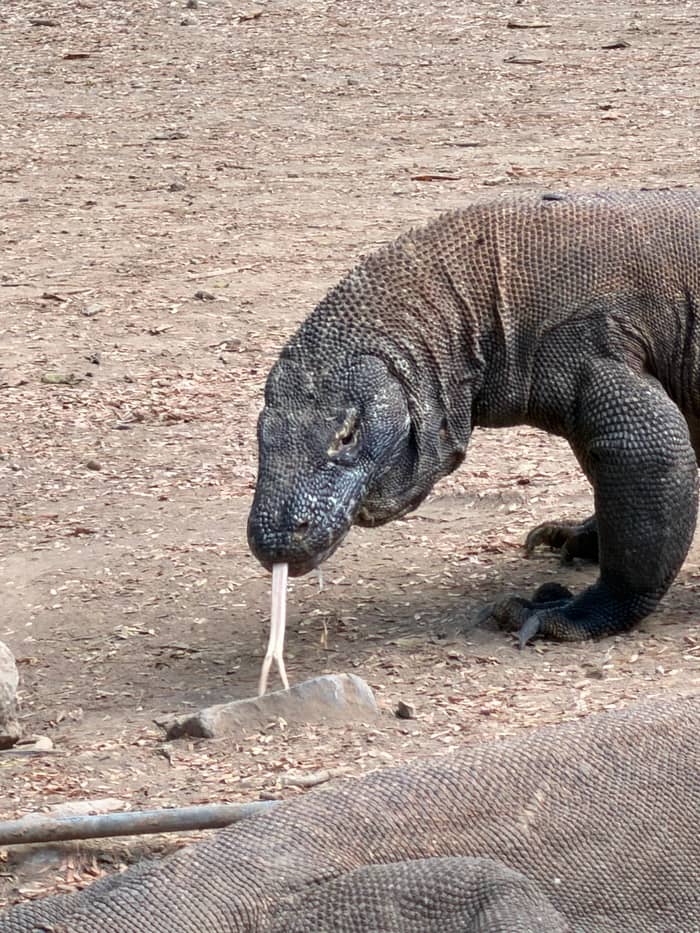
A 2-hour guided walk
- DurationTen hours afloat
- Pricefrom $93
- Rating4.74
List to tick
To do · 11 things
Mark off each item as you go; the ticks stay on this device.
0 / 11 ready
Everything ticked. Only the booking itself is left: your place on the boat.
Hold my seatsSeeing a wild dragon depends on the island, the hour and the guide. Here is how Komodo and Rinca differ, the rules on distance, what the animal is capable of and where a one-day boat trip fits in.
Editorial team, komododaytour.quest · Updated November 2, 2026 · Reading time: about 8 minutes
The essentials list
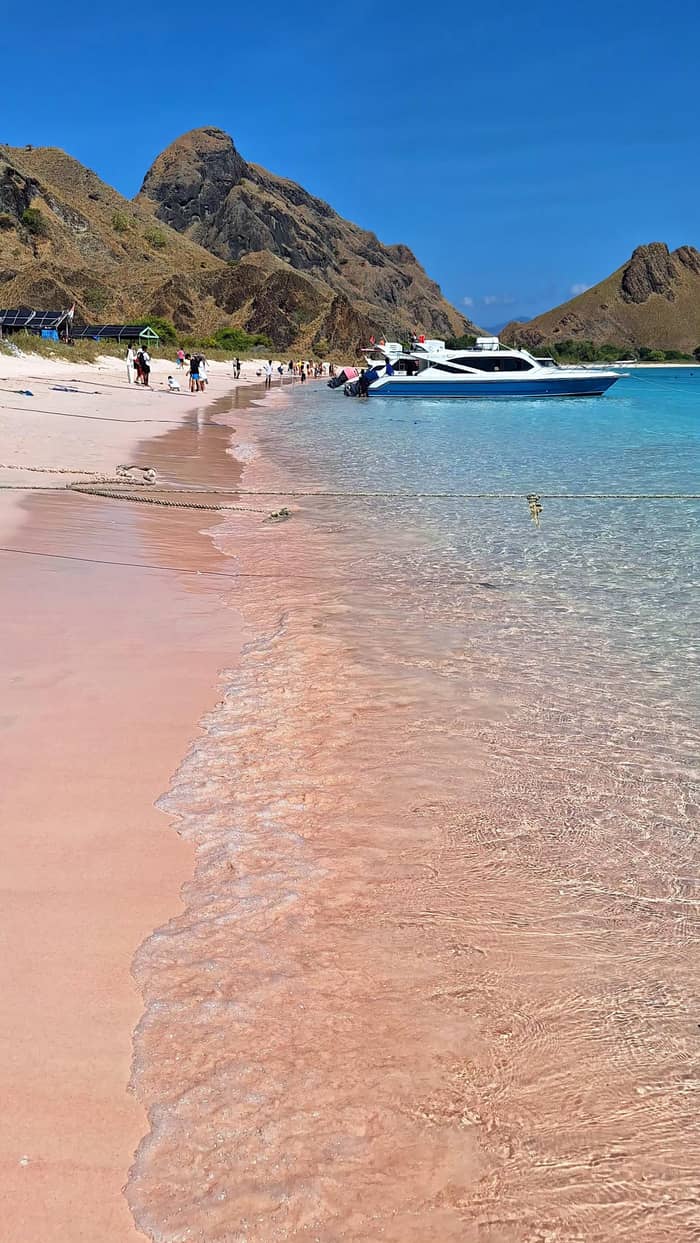
Indonesia.Travel names five islands where dragons live in and around the park, among them Komodo, Rinca, Padar, Gili Dasami and Gili Motang, with Komodo and Rinca the most popular for tourism.1 The Smithsonian's National Zoo, though, says they are limited to a few Lesser Sunda islands and have not been seen on Padar since the 1970s, a loss it ties to widespread poaching of deer, the dragon's primary prey.7,2 The two sources disagree about Padar, and the zoo's wording is the more specific, so plan your dragon time around Komodo and Rinca and treat Padar as a view.
UNESCO's listing says the park's volcanic islands are home to around 5,700 of these giant lizards, which exist nowhere else in the world,8 while Indonesia.Travel gives a range of around 3,000 to 5,700 and classes the species as vulnerable.6 Take the range as uncertainty in the count rather than a contradiction, and notice what both numbers say: this is a rare animal on a handful of islands, and that is why seeing one on a ranger-led walk is worth the effort.
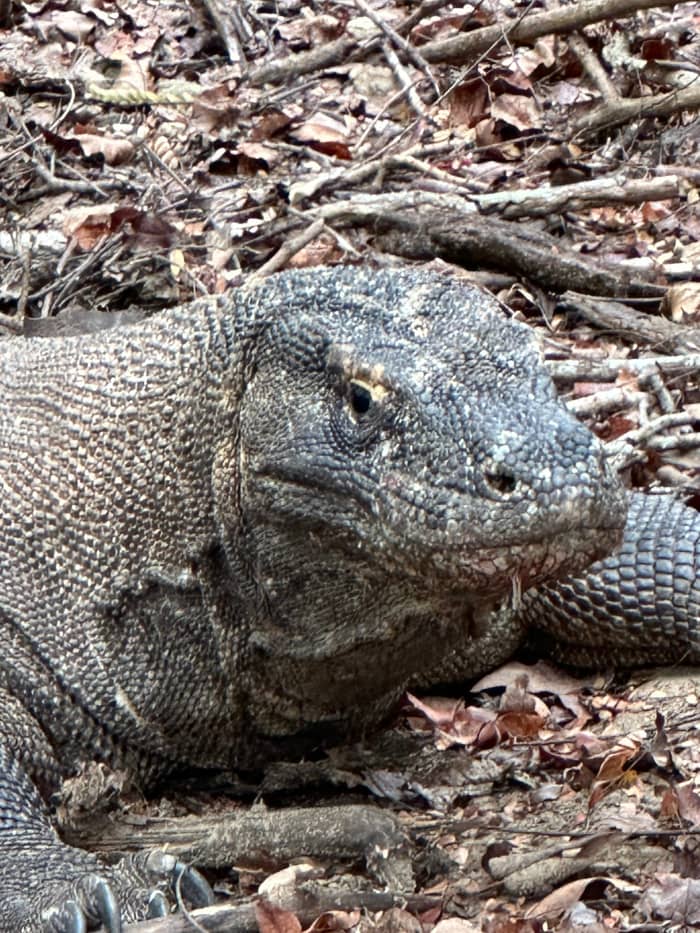
A guided walk is the product; the dragon is the reason. The park's own site says the Komodo dragon is among the world's largest reptiles and can reach 3 meters or more in length and weigh over 70 kg,9 and the Smithsonian's figures agree on the weight: wild dragons typically weigh about 70 kg, while the largest verified specimen was 3.13 m long and weighed 166 kg.10 The animal you meet beside a trail can therefore be anywhere on that scale.
Island by island
| The comparison | Komodo Island | Rinca Island | Padar Island |
|---|---|---|---|
| Dragons | Present, mostly away from trails | Higher density, more compact | None seen since the 1970s |
| Trail on foot | Several trekking options of varying lengths | Designated routes with local guides | A view hike, not a dragon walk |
| Landing | Loh Liang, on the east coast | Loh Buaya pier | Hike up from the beach |
| Yearly capacity | 187,245 people | 44,165 people | 17,885 people |
Capacity figures are the park agency's; the dragon notes come from Indonesia.Travel and the Smithsonian.23,22,17,2
Rinca is the compact one. Indonesia.Travel says it is known for a higher density of Komodo dragons and is more compact than Komodo Island,17 and the same ministry guide says Rinca Island has the largest population of the animals.18 The pier at Loh Buaya is a two-hour ferry ride from the Labuan Bajo terminal, and the ticket checkpoint and the ranger are there to meet you.19 On Rinca visitors follow designated routes with local guides.20
Komodo Island is the one with choice: it offers several trekking options of varying lengths.21 It also attracts the most tourists, yet its dragons predominantly live in remote areas away from the hiking trails, so spotting one can be a challenge.22 The park agency gives the island a yearly carrying capacity of 187,245 people, against 44,165 for Rinca.23 The two islands are budgeted very differently: Komodo is the large island with the long visit, Rinca the small one with the dense population.
The day tour this site sells lists one stop named Komodo National Park, with 2 hours for a guided walk and wildlife viewing, and its good-to-know note says Komodo Island is managed by the government and may be temporarily closed, especially in months such as November, December and January. A second one-day listing gives its Komodo Island stop 1.5 hours, and a 12-hour speedboat listing gives it 80 minutes with a guided walk and wildlife viewing. Time on the trail varies by listing, so compare the minutes, not the title.
Indonesia.Travel says it is mandatory to have a local guide when trekking to see the dragons.3 Guides and park rangers are trained to ensure both your safety and that of the dragons, the same page adds.26 There is nothing to improvise on this walk: the ranger picks the path, the pace and the place to stop, and the best thing you can do for the encounter is follow the decisions without discussion.
The ministry's dragon page tells visitors to keep at least 5 meters from the animals and never to approach or feed them.4 A different Indonesia.Travel page on the three main islands says a safe distance is at least 300 meters.5 These pages from the same ministry do not agree, and we found no fixed number in a park regulation. Of the pair, 5 meters is the figure that fits a guided walk on a path.4 Whatever number is printed, the ranger's instruction on the day governs, and the dragon decides whether the gap closes.
The animal is not a museum piece. The Smithsonian notes a venom gland in the lower jaw whose venom prevents the blood from clotting,27 and says a dragon can briefly reach speeds of 10 to 13 mph (16 to 20 kph).28 Do not turn your back, do not crouch for a closer photograph and do not walk ahead of the ranger. Keep bags closed and snacks out of sight: dragons eat almost any kind of meat.29
Choose your island
Match the island and the hour to how much patience and heat you can take.
If Give me the best chance
Early, and in Sept to Nov
Cooler hours and the prime season are the ministry's advice.24,25
If I like compact and easy
Rinca
It is compact and has a higher density of dragons.17
If I want a choice of trails
Komodo Island
It offers several trekking options of varying lengths.21
If I only have one day from town
A day listing with a walk
The main listing gives a 2-hour guided walk and wildlife viewing.
If I want dragons on Padar
Skip that hope
None have been seen there since the 1970s.2
Three days with a walk in them
The main listing
A 2-hour guided walk
Dragon focus
Moderate fitness needed
Eleven-hour day
Trekking and crowds
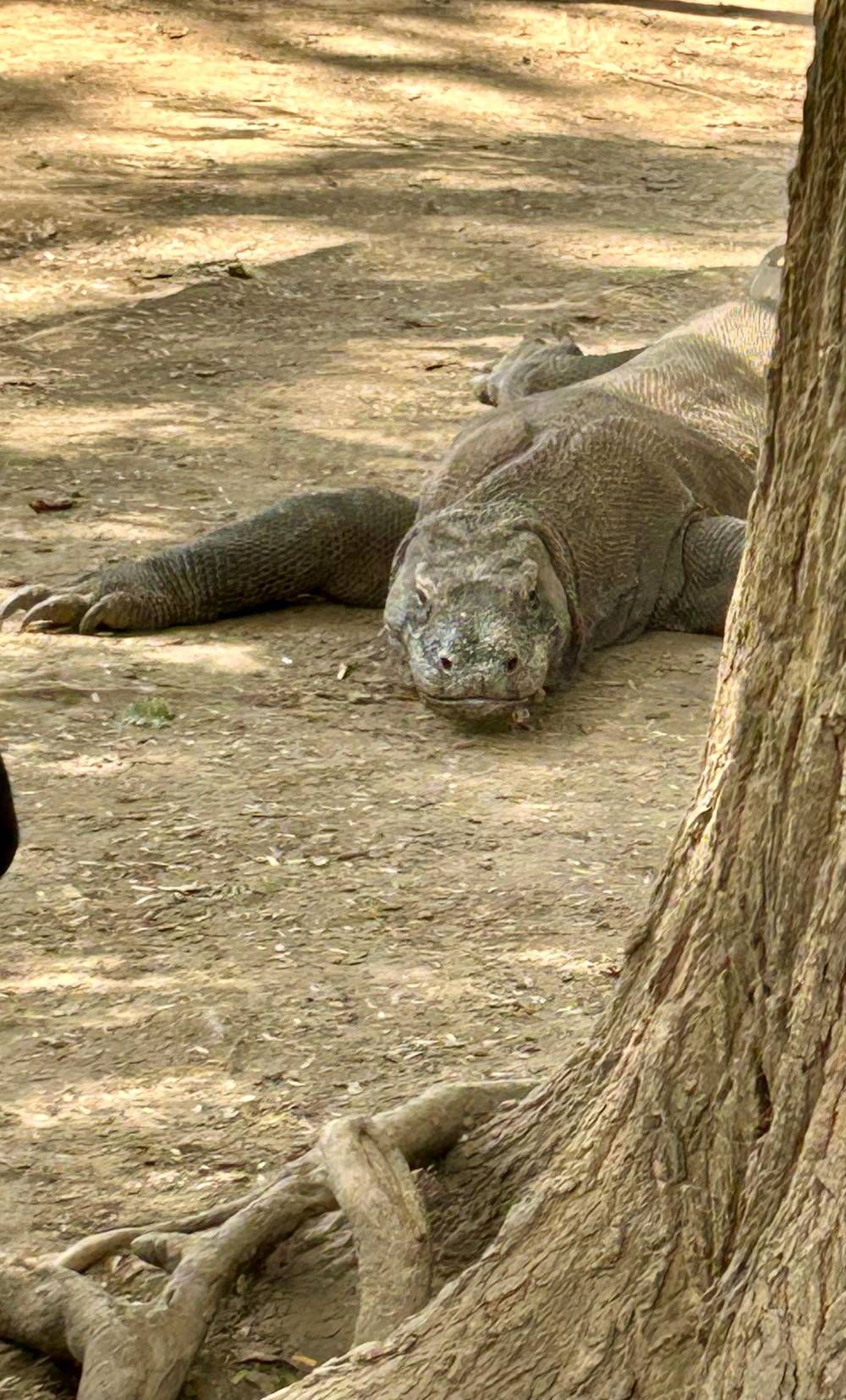
The ministry says the best time for a visit anywhere in the park is early morning, when it is cooler and the wildlife is most active.24 The Smithsonian adds that dragons escape the heat of the day and spend the night in burrows just large enough for them,30 which is a polite way of saying a midday walk may find them out of sight. Choose the earliest slot you can, and expect the animals to be resting rather than posing.
The mating season changes the odds. Indonesia.Travel says July to August is the mating season and makes the animals harder to spot,31 and the Smithsonian gives May to August for mating.11 The same ministry guide names September to November as the prime season for manta rays, whale sharks and Komodo dragons.25 The 2-day shared-boat listing makes the point in its own note: July and August are the mating season, when only a few dragons may be seen.
A dragon plays a long game. The Smithsonian says females lay about 30 eggs in hillside depressions or in the nests of megapodes, the eggs incubate for about nine months, hatchlings weigh less than 100 grams, and wild dragons live about 30 years.12,13,14,16 Large dragons cannibalize young ones, so the young often roll in fecal material to take on a scent the big ones avoid.32 The adult lying by the path is the end of a long and risky childhood, and that is worth a moment of respect.
One dragon, start to finish
May through Aug
The Smithsonian gives May to August for mating.11
Soon after
Females dig hillside depressions or use megapode nests.12
About 9 months
The eggs incubate in the nest for about nine months.13
Hatching
Hatchlings average 40 cm in length.14
Age 5
Dragons begin to hunt larger prey at this age.15
Around 30 years
The Smithsonian says wild dragons live about 30 years.16
The park agency set a quota of 1,000 visitors a day from April 1, 2026, to protect the local ecosystem.33,34 It recorded 429,509 visitors in 2025, 68 percent of them international, and a 2022 study put the yearly carrying capacity at 378,870.35,36 The agency also says high-intensity human activity can decrease the alert response behavior of Komodo dragons, a point worth keeping in mind on the trail.37
The quota focuses on Padar, Rinca and Komodo Islands and 23 surrounding dive sites.38 The head of the park authority has said the figure of 1,000 is not absolute: days under 1,000 can be carried over to busy months.39 Padar is to run three sessions a day with a maximum of 300 visitors each, and the limit runs through the SiOra app.40,41 The dragon walks sit inside the same system, so ask your operator which slot and which trail your group has been given.
Komodo National Park was established in 1980, and strict anti-poaching laws have helped protect the dragons, although illegal activity still takes place, according to the Smithsonian.42 The park's own site names destructive fishing as the most potent threat to its biodiversity.43 The dragon walk is the quiet part of a protection effort whose pressure points are elsewhere, and the rules you follow on it are your share of that effort.
Video
Deanna Troy Travels on YouTube · YouTube loads only once you press play.
No Komodo dragons have been seen on the island of Padar since the 1970s, the result of widespread poaching of deer, the reptile's primary source of prey.
Three one-day listings include a dragon walk. The one this site sells starts from $93, has 1,663 reviews rated 4.74 and lists a 2-hour guided walk with wildlife viewing. A listing built around the dragons starts from $82, has 568 reviews rated 4.74 and asks for a moderate level of fitness. A third, whose title says it comes with all fees, starts from $135, has 65 reviews rated 4.52 and notes a moderate amount of trekking and crowds at the attraction spots.
Compare the minutes, not the adjectives. A walk of 2 hours, a stop of 1.5 hours and one of 80 minutes are all listed, and in each case the Komodo Island stop sits in the middle of a day that also holds snorkeling stops. The shortest listed time is not necessarily the worst: a ranger sets the route, and a walk covers only as much ground as the group can manage in the heat. Ask your operator which trail the group will take before you book, and tell them honestly how fit and how patient you are.
Pack for the walk, not the boat: closed shoes with a grip, water in a bottle that closes, a hat, and sleeves against sun and insects. Keep your voice down, keep your eyes on the ranger and keep your camera strap short so that both hands stay free. The walk is slow, the dragons are patient, and nobody gains by hurrying. The best photograph is usually the one you take without stepping off the path.
FAQ
Indonesia.Travel names five islands with dragons and calls Komodo and Rinca the most popular for tourism.1
Indonesia.Travel says a local guide is mandatory when trekking to see the dragons.3
The Smithsonian says wild dragons typically weigh about 70 kg; the largest verified specimen was 3.13 m long.10
The Smithsonian documents a venom gland in the lower jaw; the venom prevents blood from clotting.27
Sources
Keep reading
Questions about Komodo or the boats? Ask a person here.